---
title: "Programs Resource Circle - Center for Nonviolent Communication"
description: ""
url: "https://www.cnvc.org/about/governance/prc"
date: "2026-09-18T06:25:47+00:00"
language: "en-US"
---
# Programs Resource Circle
The Programs Resource Circle's (PRC) purpose is to support [CNVC](https://www.cnvc.org/about/cnvc) and [Certified Trainers](https://www.cnvc.org/trainers) in sharing NVC around the world through [International Intensive Trainings](https://www.cnvc.org/learn/intensive-trainings), Virtual Intensive Trainings, and Continuing Education Training for Certified Trainers.
In order to build on past learnings, this Circle will:
- adapt CNVC’s programs as much as possible to the local cultures and specific audiences that they are delivered to while remaining in accordance with the [*Rosenberg Gift*](https://drive.google.com/file/d/1UIOM5j40__ZVg4g7LY9_RuV9vaPreRFh/view?usp=sharing).
- create access and attend to issues of resource disparity and inequity.
- create procedures and policies that anchor the commitments structurally.
- engage with existing projects, local teams and trainers, and others to build a collaborative, bottom up web of relationships before deciding whether or not it makes sense to conduct an IIT in a particular region
#### ↓ Click the sections below for more details
History and Context Originally, International Intensive Trainings (IITs) were a way for CNVC's founder, Marshall Rosenberg, to spread his work. Marshall viewed IITs as an opportunity for participants to live Nonviolent Communication for a longer period as a community and experience its transformative power in personal, interpersonal relations, and social change. The format of lIT's was designed to offer a complete NVC curriculum as he taught it.
Marshall chose trainers who he felt confident had skills to hold the intensity of large groups whilst embodying the process. Before he retired from teaching lITs, he appointed other trainers to carry on his work, building teams whose profiles would meet those essential qualities.
Over the years, CNVC has refined a system for organizing lITs including choosing a training team, providing financial assistance for participants, and supporting local organizers in handling the local logistics. Most of this knowledge resided in the heads, hands, and hearts of IIT staff, trainers, organizers, and participants, and more recently with the members of the IIT-Resource Team (IIT-RT).
Members PRC is made up of seven Certified Trainers who are selected through an election process in which Members vote for new members of the Board, ACC, and PRC:
1\. Nominations: Any Certified Trainer (CT) who is in active standing is eligible to be nominated.
a. Some helpful skills and qualities for members of the PRC are that they:
i. have served on lITs during the past 5 years;
ii. are connected with one or more NVC communities
iii. have experience engaging and connecting with people from diverse cultures;
iv. think at a systems level, meaning that they can hold the larger context of the organization's well being and success when working with specific strategies;
v. enjoy working collaboratively with others;
vi. know how to work in acceptance and alignment with the current resources- they know to say when is "good enough for now";
vii. show awareness of how historically power-structures have limited various groups from accessing resources and protections.
vili. demonstrable experience with transforming structures in ways that create more inclusion, diversity and equity
ix. have capacity to persist in creating structural change even if the organization (CNVC) is not ready yet
2\. Statement: If the CT nominated is willing to serve, they provide details about themselves as requested by the Elections team
3\. Stipend: Each PRC member who is still an active member on the 15th of December of each year may receive a stipend of USD $1,500 for that year. The PRC as a whole may choose to allocate their stipend money differently among its members.
In order to balance continuity with shared power, CTs can serve in the PRC for up to six consecutive years if they get re-elected by members, after which they leave for at least one year before being eligible to rejoin. If one member of the PRC leaves before their term expires, the remaining members of the PRC will have two options:
- Wait until the next annual election to fill the seat; or
- Invite the person who finished with the next highest total in the previous election to fill the remainder of the term that has been vacated.
The membership of the PRC will be kept at a minimum of 5; if it goes below this, the PRC will automatically invite the next election candidate on the list from the most recent election (to get back to a minimum of 5).
In order to nurture our growing global organization, if there are no members from the Global Majority in the PRC, the PRC will find a way to consult with and/or seek advice from individuals or groups from the relevant groups, who are able to offer advice and support. In addition, the PRC will consult with the DEl Vertical when it is set up to ensure that the policies it makes are in alignment with the principles of Diversity, Equity, and Inclusion.
Purpose **1. AIM: (what PRC does)**
• Supports CNVC and Certified Trainers in sharing NVC around the world with a focus on intra-personal, interpersonal and systemic transformation\* of domination systems through CNVC Programming (International Intensive Trainings, Virtual Intensive Trainings, and Continuing Education Trainings for Certified Trainers).
*\*Systemic transformation is understood in this context in relation to Marshall's words on "transforming domination systems into partnership and cooperation systems", and within that, understanding and acknowledging what are there domination systems that are normalized in our lives and meet the needs of some, and not meet the needs of so many others - so when we become aware of them, since only when we are aware we can make choices to change them in ourselves, in our relationships and in the world. (Domination systems can be named: Racism, colonialism, patriarchy, capitalism, cis-hetero normativity, ableism, capacitism, ageism, classism, etc.) In the quest to transform domination systems, it is essential to hold the people involved in those systems with compassion, and not to fall back into the separation mentality of "othering" and creating enemy images.*
- 1.A: International Intensive Trainings (IlTs)
- Creating policies to
- Adapt CNVC's IITs as much as possible to the local cultures and diverse audiences that they are delivered to while remaining in alignment with the Rosenberg Gift
- Maintain and broaden access in the face of resource disparity and inequity
- Evaluate whether IITs are consistent with the spirit of the Rosenberg Gift
- 1.B: Virtual Intensive Trainings (VITs)
- Creating policies to
- Adapt CNVC's programs as much as possible to the virtual context with diverse audiences
- Work with the ACC to assess whether VITs can substitute lITs in the Certification process, in which case that ensuring that VITs remain in alignment with the Rosenberg Gift
- Maintain and broaden access in the face of resource disparity and inequity
- Evaluating whether VITs and other programs in the domain are consistent with the spirit of the Rosenberg Gift
- 1.C: Continuing Education for Certified Trainers (CET)
- Creating policies to:
- Create curriculum and other learning avenues for Certified Trainers to continue in their learning journey with Nonviolent Communication as well as other modalities, skills, and tools to deepen their capacities as facilitators
- Create accessible ways for trainers across the world to remain on a learning pathway as well as to offer their expertise in Continuing Education
- Evaluate and update the CNVC CET programming in order for CTs to stay current, relevant, and effective
- Please note: The PRC may not make policies about whether CETs are required for remaining certified. That decision belongs with both the ACC and the Board. The PRC however may make policies related to CETs when it comes to lIT and VIT trainer selections.
- Create programs directed specifically towards supporting CTs become familiar with, informed about, and able to facilitate contexts where DEl in order to contribute to systemic transformation, trauma awareness, and any other relevant body of work which would support CTs to facilitate in different contexts to care for more needs.
\* Systemic transformation meant as defined previously in this document in item 1
- - PRC will consult with DEI Vertical, governance consultants, and/or the Board of Directors in order to put CNVC's Continuing Education Trainings in place.
- 1.D: Other
- Creating policies for anything else the PRC finds relevant and significant within their domain.
**2. DOMAIN: (what PRC makes decisions about)**
PRC makes policies for areas including but not limited to:
- how trainers can become IIT/VIT/CET trainers
- trainers/trainer team selection
- organizers/organizer team selection
- confirming IITs, VITs, and CETs
- programs (design/intellectual property and quality of the programs) and curriculum, content, and purpose of the IlTs, VITs, and CETs
- localization of programs, diversity of trainers, organizers, and participants,
- how to vet a location, time, team, and other aspects of lITs, VITs, and CETs
- scholarships/financial assistance
- financial resource allocation
- and other issues related with IITs, VITs, and CETs
PRC's policies and procedures are the guardrails and will be used as a frame within which Operations and Organisers - ED, staff and organizers entrusted with organizing lITs, VITs and CEts, - makes decisions on specific lITs and other programs.
**3. MAINTENANCE OF POLICIES AND DOCUMENTS**
PRC also holds and maintains:
- [The Manual for Organizing an IIT](https://docs.google.com/document/d/1lhLUVbbrEpi4MpRwi61lGYvDtn8Uqeu8UX4g6-SI0dc/edit)
- All other policies related with IITs, VITs and CETs, published in a place visible on the CNVC website (see below, 6.2 Information Flow)
- The PRC can set parameters and information for the lIT Dashboard as well as any other information published publicly by CNVC regarding CNVC programming.
Relationship with other bodies in the CNVC System **1. PRC involvement in IIT Approval**
- 1: Once an lIT proposal is submitted and CNVC's programs dept/operations has met with the organizers to understand their proposal and context, Operations will submit this proposal to the PRC. The PRC will review the proposed team to ensure that all existing policies and procedures were upheld. Operations will give PRC a minimum of 30 days within which to respond. The PRC will make the final call on whether a proposed IIT team adheres to existing policies and guidelines, and ask for changes if it does not. If the PRC is unable to respond within the given time, Operations may take a decision about the lIT going ahead.
- 2. Once the lIT has been announced, Operations is fully responsible for deciding whether the lIT goes forward, in terms of finances, registrations, and other parameters. Operations has the option to consult with or hand over the decision on whether a specific lIT happens to the PRC.
**2. VITs and Overlaps with ACC mandate**
- The PRC is responsible for creating policies around the curriculum, content, and purpose of VITs
- PRC will initiate a dialogue with ACC in order to assess whether VITs can substitute lITs. This will be a shared agreement between ACC and PRC.
**3. Shared decisions with Operations**
- Adding or Replacing trainers or organizers if they withdraw after the original decisions are made: When a trainer withdraws from an lIT or a VIT after the original decisions are made, assuming there is at least 90 days before the start of the training, the Organizer, who would also be representing the Trainer Team, in partnership with the E.D. will choose another trainer that also needs to be approved by PRC to ensure that the policies created by the PRC are upheld in the new decision.
- In the case of withdrawal of a trainer less than 90 days from the start of the training (for example, the trainer cannot obtain a visa to get into the country where the lIT occurs, or is sick), then the Organizer, representing the Trainer Team, in partnership with the Operations will choose another trainer based on existing policies and inform the PRC.
- Replacing organizers if they withdraw from the lITs or VITs after the original decisions are made: Operations/E.D. whether to seek for a new organizer or postpone/cancel the event and inform the PRC. The PRC may create a policy around how to do this.
Roles The PRC can create internal roles and committees to execute its role and domain. In addition, the PRC will select:
**1. PRC-Operations representative**
The PRC Operations representative will engage with Operations when Operations:
- faces a situation not yet covered by PRC's policies or guidelines, or
- would like to make exceptions to existing guidelines (wherein the final decision belongs to the PRC).
Operations will also select an Operations-PRC Representative to engage with PRC when PRC:
- needs more information or data about IITs, VITs or CETs in order to create cohesive policies based on data
- would like to participate in occasional Operations processes (wherein the final decision belong to Operations)
**2. Coordinating Circle roles**
The PRC will select two representatives for the Coordinating Circle, based on the criteria provided in the [Coordinating Circle mandate](https://docs.google.com/document/d/1mTExAKRxbC-XK46dpLFptRafTbaHpeTJD4iNFuA-fKw/edit?usp=sharing).
Systems **1. Decision-making**
PRC will determine their decision making process, either based on the [CNVC governance agreement](https://docs.google.com/document/d/1Uiet4HWeqKcM-RsPXiD8wW6HN6gm4vv_35Og6htEywo/edit#heading=h.t4afd12o9qzq) or through a collaborative decision-making tool selected by members of the PRC.
**2. Communication - Information Flow**
- All PRC policies must be published in a place on the website that is clearly visible to trainers, organizers, and participants.
- Communication to other circles:
- PRC will appoint 2 individuals as a link into the Coordinating Circle. These 2 members of the CC will be the main contact for the Board, Operations and Coordinating Circle, unless defined otherwise.
- PRC will share how they have engaged and responded to Feedback and their current activities at the CNVC Annual Meeting,
- PRC will adhere to the Information Flow system created by the CC.
- Communication with members:
PRC will send an update to Members each year and communicate major decisions and developments as they occur during the Annual Meeting and through posts on the Global Home
The PRC will also publish all policies in the Global Home and on the CNVC website with the support of Operations.
- Dashboard E IIT Dashboard
PRC will recommend information and changes to the lIT dashboard visible to community members on information such as how and where ITs occurred each year, names of trainers who have been part of IIT trainers team, where, how many times so far in their career and per year, how much money different lIT trainers and organizers received from CNVC, etc. to support our community of trainers to share the process.
Maintenance of the dashboard with current information is the responsibility of Operations.
**3. Feedback Process**
PRC will hold bi-annual meetings with Operations to evaluate how the guidelines and policies have been applied. This will also be the opportunity for PRC to:
- Receive feedback on its policies and guidelines,
- Learn from what happens on the ground, and
- Integrate the learning to allow its policies and guidelines to evolve.
- The PRC will receive:
- Feedback from members.
PRC is part of CNVC Feedback System to receive feedback from CT.
- For programs.
PRC will use the existing feedback form designed by operations for participants of every IIT and VIT. CNVC staff will collect the feedback from lITs and VITs and share it with PRC. This will allow PRC to compare, contrast and impact the change in the procedures and policies.
- PRC can request changes or additions to the Feedback Forms
**4. Conflict Engagement Process**
Until the Conflict Engagement System becomes mandated by the Coordinating Circle, the PRC will manage and respond to conflicts involving
- Program participants
- Trainers and organizers of the PRC programs
With regards to sexual behavior harassment, PRC refers to [Sex and intimacy in NVC trainings](https://docs.google.com/document/d/13WuAfNEnAjN26zCgBNh6wwljgHYkcoSk74aInIeDmFw/edit). In case the PRC finds that any existing agreement with CNVC (such as the Trainer Agreement) is broken by the actions of trainers or organizers, the PRC will escalate this conflict to the Board and ED. Upon the creation of the CES, the PRC will defer to the new system.
**5. Resource Allocation**
Resource Allocation in CNVC is held by the Executive Director in collaboration with the Board Treasurer. The Board Treasurer and ED will allocate financial resources to the PRC to use in order to develop the Continuing Education Trainings. The PRC holds domain on the use of these funds, which may include paying trainers and consultants with expertise in various fields including DEl, so that they can support in creating the curriculum and be compensated for their work.
PRC has a role in resource allocation when it comes to allocating Financial Assistance and flow of resources within IITs, VITs and CETs. To this end
- PRC will put a financial assistance process in place defining how and to whom scholarships may be offered, including a process for financial-need-assessment. This policy will be executed by the Financial Assistance Team for each programme, or through a team defined by the PRC.
- PRC will also review the existing policy for [Financial Assistance for IITs](https://docs.google.com/document/d/1zMzSBIxGsymXOsTx59qVqk27-9EMs5Jxxl4teJz5zx4/edit?usp=sharing) to allocate 10 to 15% of CNVC's overall (global) IIT gross profit to financial assistance with more emphasis to participants and recommend any changes needed.
- As VITs and CETs come into place, the PRC will create requisite policies for equity and access through resource allocation policies, in an advice process with the Executive Director and Board Treasurer.
**6. Diversity, Equity, and Inclusion (DEI)**
- The PRC is responsible for the including a consciousness of and focus on diversity, equity and inclusion in CNVC's programming
- The PRC will consult with CNVC's DEl team and engage in an advice process to support them to bring this focus into policies.
- The PRC members may also consult with CNVC's DEl team in the creation and construction of CNVC programming.
- PRC members, as all governing body members, are encouraged to attend the DEl trainings for CNVC governing body members conducted by the DEl team.
At the time of this review, CNVC's DEl team is in the process of creation. Until the team is created, the PRC is encouraged to engage in an advice process with the Board to weave in this focus.
Mandate Review - The Board is responsible for governance and maintenance of all governance mandates, including this mandate for the PRC.
- This mandate will be reviewed every 18 months beginning in June 2026, in an advice process with the PRC.
- Some topics to track for review in June 2026:
- Other programs besides IITs
- Revisit the question of "quota" or "how to select PRC members"
# Members of the Programs Resource Circle:
[ 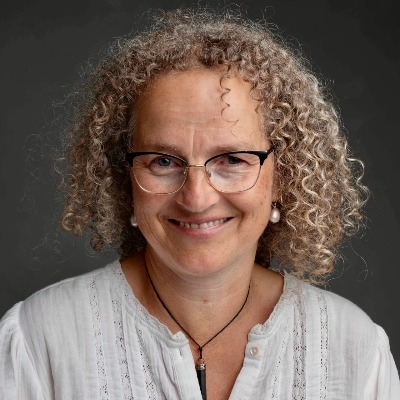
### Anniken Poulsson Beer
Norway - Certified Trainer since 2012
###### Term expires April 2029
](https://www.cnvc.org/index.php?option=com_content&view=article&id=55:anniken-poulsson-beer&catid=13)
[ 
### Reena Ginwala
India - Certified Trainer since 2023
###### Term expires Dec 2026
](https://www.cnvc.org/index.php?option=com_content&view=article&id=982:reena-ginwala&catid=13)
[ 
### Alejandra Betanzo
Mexico - Certified Trainer since 2023
###### Term expires Dec 2026
](https://www.cnvc.org/index.php?option=com_content&view=article&id=1508:alejandra-betanzo&catid=13)
# Contact the Programs Resource Circle
First name
Last name
Email
Country \*
United States
Your Message \*
Turnstile \*
Phone